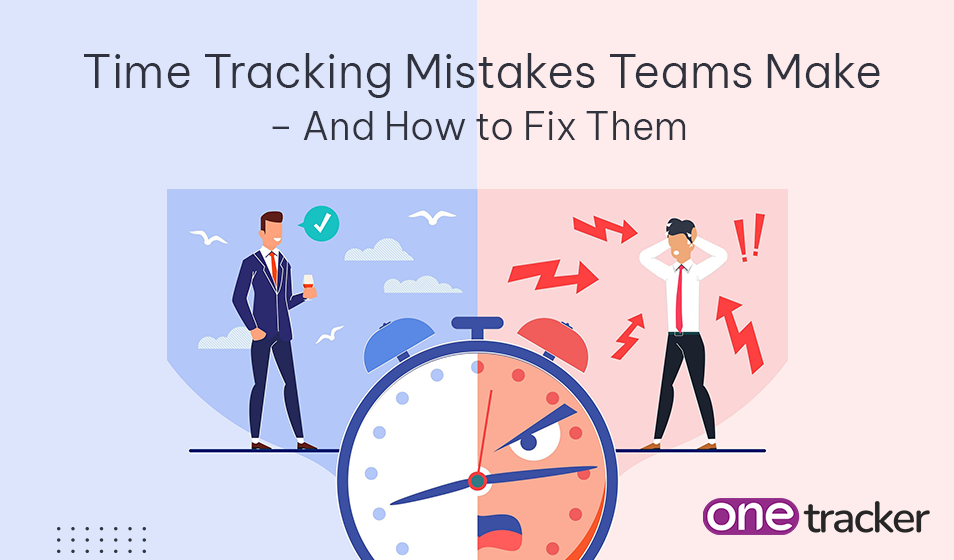
Time tracking is at the heart of contemporary work. If it's remote team coordination, running an ad agency, or helping grow a start-up, team performance metrics about time inform your decisions on productivity, resource allocation, and profitability. However, despite its huge benefit, time tracking is frequently done incorrectly. Misapplied, it breeds frustration, skewed data, and distrust rather than clear oversight and confidence.
On the positive side, it’s a fact that most hiccup cases aren’t the problem with the tool itself. They have much more to do with the practices relating to it. So, let’s take a look at the common errors committed during time tracking and, most importantly, the necessary fixes.
Treating Time Tracking as Surveillance Instead of Support
One common mistake made by the team can result in the time-tracking system being viewed by the employee as a means for observation or surveillance by the company or business or the manager or team leaders. This causes resentment because the employee will rush through the process, exaggerate the number of hours spent on the task, or lose all focus on the system, which further renders the data inaccurate.
It all begins in our mindset and communication methods. Tracking time must be framed in terms of improving how teams can function even better, as opposed to how it could be used as a tool for micromanagers. When individuals are shown that working hour information can be used in balancing respective project loads, improving estimates, avoiding project burnout, and efficient resource planning based on those estimates, a change in mindset occurs, and acceptance follows.

Tracking Time Too Late or All at Once
Teams often expect employees to mark their work hours at the end of the week or even the month. Such practices are prone to estimates, incompleteness, and inaccurate information. Since the recording of work hours is based on memory rather than a moment-by-moment process, functionality is lost.
One way to make this easier is to promote daily or real-time time tracking. Modern time tracking applications have made this easier than ever using timers and reminders. When you track your time shortly after the actual work activity occurs, the accuracy rate becomes significantly higher. Over time, this habit becomes second nature, and teams spend less effort correcting mistakes or filling gaps.
Being Too Vague with Tasks and Categories
Another common issue is overly broad or unclear task categories. Entries like “project work”, “development”, or “meetings” provide very little insight. While hours may be logged correctly, the data becomes almost useless for analysis, forecasting, or decision-making.
In an attempt to fix this issue, it is recommended that teams consider creating categories that are actually meaningful and reflect how actual work is being done. Instead of general categories, teams should move on to categories that are related to deliverables, phases, or outcomes. This gives teams ease of tracking because it does not generate confusion within leadership.
Overcomplicating the Time Tracking Process
Some companies make time tracking too complicated with too many rules, approvals, and details required. Once time tracking is added to a busy day, people may start rushing this process, too, or even opt out of doing this altogether.
The key is simplicity. A good time-tracking system should be absolutely painless in daily practice. Keep required fields to a minimum, and don't request detail it doesn't really need. People are more likely to use it when it's fast and intuitive, and the data stays valid.
Ignoring the Data After Collecting It
Lack of usage of the available information on spending time on tracking it is also a common mistake. Hours are spent by teams on logging each and every minute, but the information gathered is not put into usage. This leaves one with a creeping suspicion that tracking time is pointless.
The solution is to bring the time-tracking data directly into how we make decisions. Share what the data shows in team gatherings, rely on the reports to tighten our estimates, rebalance workloads, and spot where things are bottlenecking. People buy in more to the process once they see that logging time actually drives real improvements: better planning, fewer frantic last-minute scrambles, and a fairer spread of work.
Not Training Teams Properly
Many organizations roll out a time tracking tool with little to no onboarding. Teams are expected to “figure it out”, which leads to inconsistent usage, confusion, and errors. Different people interpret categories differently, making reports unreliable.
Proper onboarding and ongoing guidance are essential. Teams need to understand not only the method of logging hours worked but also the purpose of doing so and what good logging actually entails. There is no substitute for brief training sessions and written policy reminders, and occasional refresher courses do not go amiss.
Failing to Adapt as the Team Grows
What worked when the team had just five people may falter as the number grows. Many organizations use the same time-tracking setup even when their processes, offerings, or team layouts have changed. This results in outdated categories, irrelevant reports, and frustrated users.
Making it a point to analyze and optimize the practice of time tracking is the way to go. As the size of the teams grows along with the diversification of the projects being handled, the code tracking tool can and should also adjust. This is ensured by conducting periodic checks.
The Conclusion
Time tracking can become a blessing in disguise, rather than a chore. It can become a solution to clarity on priorities, increased productivity, and helping the organization grow once done in a thoughtful manner. By moving away from the usual traps and rather focusing on simplicity, openness, and insights, time tracking can become the one factor that gives a competitive advantage.
If your time tracking is falling by the wayside or the results are not what you expected, perhaps a more intelligent way may provide you with what you need. Give us a call today and see how we might help you implement a time tracking system that your staff actually adopts. Let’s turn your time data into better decisions, healthier workloads, and measurable growth.
About the Author