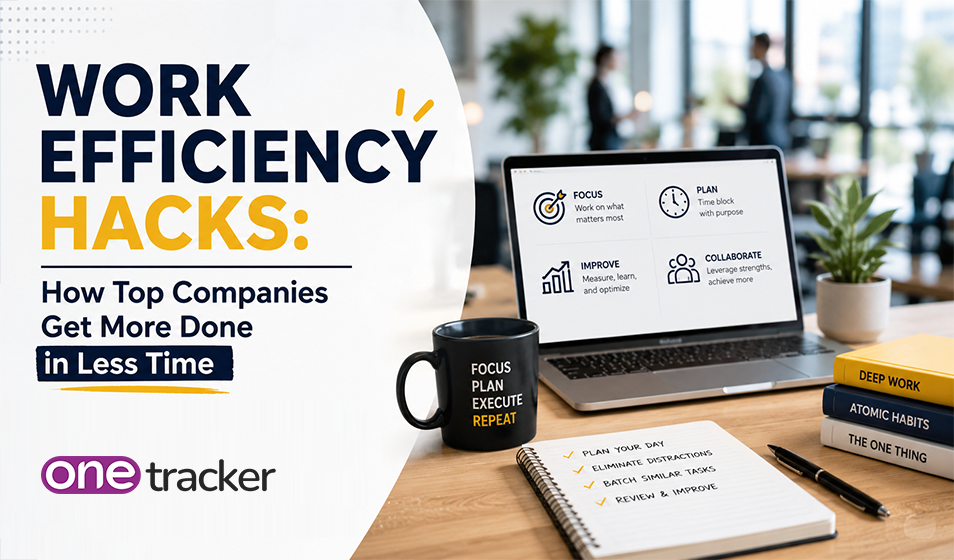
Most companies want to fix daily productivity without burning out their teams. But the businesses that actually pull this off don't just demand longer hours. They build simple, deliberate systems that cut the friction out of an ordinary workday. If you want to know how industry leaders scale, look at how they structure their teams, manage their hours, and pick their employee work tracking software.
The Real Cost of Workplace Friction
The biggest tax on corporate productivity is structural friction. Think pointless status meetings, scattered Slack channels, and a mountain of admin work that keeps people from doing their actual jobs. When employees spend their entire morning digging through hundreds of emails or sitting through a call that should have been a text, they waste their best focus hours.
High performing companies treat worker attention like a finite resource. They protect it by creating environments where people can actually think. That means management has to actively look for bottlenecks in daily communication. When teams have a clear path to finish their work without someone tapping them on the shoulder every five minutes, projects get done faster.

Rethinking the Calendar
Large companies often use strict calendar rules to win back lost hours. A popular approach is setting up completely meeting-free days, frequently managed through employee work tracking software to monitor productivity gains. This gives engineering, design, and writing teams large blocks of uninterrupted time to focus on complex projects. When people can dive into a task without constantly checking the clock for their next Zoom call, the quality of the work goes up right along with the speed.
Another trick is shortening standard meetings. Shifting a default thirty minute invite down to fifteen minutes forces everyone to show up with an agenda. Discussions stay sharp and actionable instead of drifting. Fast moving companies also require every meeting to have a clear owner who sends out action items immediately afterward to keep the momentum going.
Making Asynchronous Work the Default
Real time messaging apps can make a team look incredibly busy while completely fracturing their focus. If employees feel forced to reply to every ping within two minutes, they can't focus on deep work. Successful organizations are moving toward asynchronous communication, meaning immediate replies aren't expected for non urgent issues.
But this shift requires teams to document things clearly. Instead of firing off a quick, vague question over chat, workers write out comprehensive updates or briefs that colleagues can read when it fits their schedule. This lets people own their day and work during their personal peak hours. Plus, it leaves a permanent paper trail of decisions, which makes onboarding new hires much easier.
Task Batching and Time Blocking
On an individual level, top performers group their work. Task batching means knocking out similar activities all at once. Like answering client emails, reviewing code, or filing expense reports. Handling these in one go avoids the mental fatigue that comes from constantly switching contexts.
Time blocking takes this a step further by mapping these batches to specific hours. You might spend the first two hours of your day on creative problem solving, the next hour on admin chores, and the afternoon on collaborative meetings. When the rest of the team can see this schedule, or when it is integrated into an employee productivity tracker, it sets clear boundaries and keeps interruptions to a minimum.
Cleaning Up the Tech Stack
A lot of businesses make the mistake of buying too much software, assuming more apps equal better results. In reality, a bloated tech stack just confuses people. Employees waste hours moving data between systems that don't talk to each other, hunting for files across multiple drives, and drowning in notifications.
Market leaders do the opposite: they consolidate. They choose central platforms that handle multiple jobs at once, like tracking project progress, monitoring hours, and storing documentation. Fewer logins mean less mental fatigue for the team. A streamlined software setup also makes it easy for managers to see exactly where projects stand so they can put resources where they matter most.
The Conclusion
At the end of the day, efficiency comes down to absolute clarity. When everyone knows exactly what their priorities are and how success is measured, they don't waste time on low value tasks. Most wasted corporate hours happen simply because management's goals don't align with daily execution.
To fix this, successful organizations use transparent tracking tools. Integrating an employee productivity tracker into daily operations shows everyone who is working on what and when it's due. When deadlines and responsibilities are out in the open, accountability happens naturally without micromanagement. That clarity is what allows a business to scale without adding endless layers of middle management.
If your business needs to streamline operations and eliminate daily workflow bottlenecks, our team can help you build the right systems. Contact OneTracker today to see how our tailored management solutions can improve your organization's daily output.
About the Author