TL;DR
- Centralized workforce monitoring provides real-time visibility across all locations from a single dashboard.
- Fragmented tracking systems create data silos, payroll inaccuracies, compliance risks, and operational inefficiencies.
- A unified platform integrates with existing biometric devices, RFID readers, and mobile check-in systems without requiring major infrastructure changes.
- Real-time staffing insights help managers optimize workforce allocation, reduce downtime, and improve productivity across multiple sites.
- Centralized safety monitoring tracks occupancy limits, employee certifications, and emergency mustering for every facility.
- Built-in compliance automation applies location-specific labor laws to minimize payroll errors and reduce legal risks.
- Consolidated reporting allows organizations to compare labor costs and productivity across all facilities for better decision-making.
- OneTracker helps businesses manage distributed operations through a scalable employee location tracking solution that delivers a unified operational view.
Industrial companies don't live under one roof. They are scattered across regions, states, and time zones. Managing a footprint like that gets messy. To keep operations running safely, leadership needs to know exactly what is happening on the floor at every single location. But data loves to stay isolated. When metrics get trapped inside individual facilities, corporate ends up flying blind.
You get situations where a plant in Ohio is completely choked by bottlenecks, while a facility in Texas is sitting on idle capacity. Right now, finding those gaps usually requires a miserable marathon of phone calls and spreadsheet compiling because you lack a Multi-location workforce monitoring tool. The real problem? By the time that data actually hits an executive's desk, it's already yesterday's news. The window to fix the issue has closed, and the inefficiency has already cost you money.
The Problem with Fragmented Tracking Systems
Trying to fix operations by installing different tracking software at every factory rarely works. You end up with one plant using punch cards, another using digital badges, and a third tracking contractors on paper clipboards. It just traps your data in isolated silos.
Cleaning up those messy formats ruins schedules. Payroll spends days trying to piece together hours from three different systems, and safety managers have to hunt down compliance records site by site. It also leaves leadership guessing on actual labor costs. If your systems can't talk to each other, you won't notice where you are losing money or where teams are sitting idle.
The Architecture of a Single Dashboard
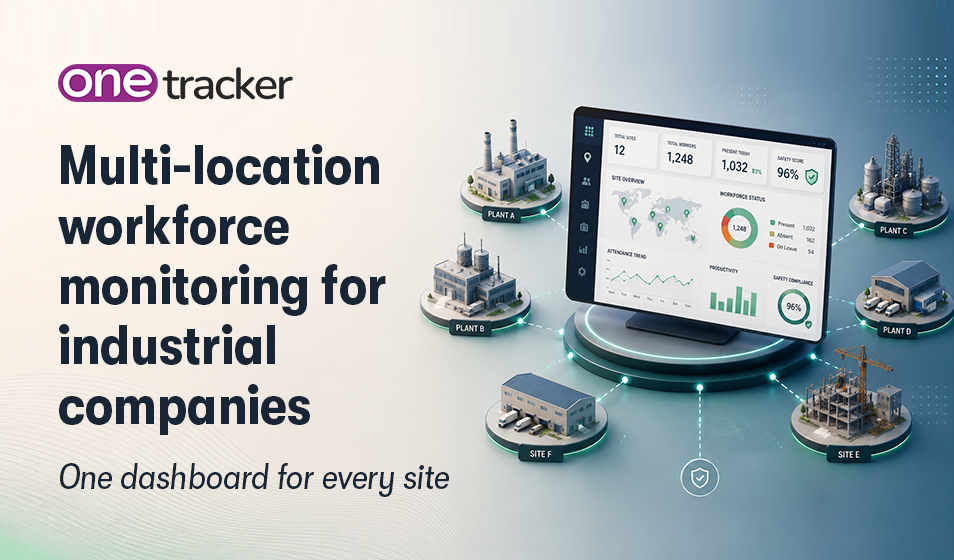
Industrial managers spend way too much time logging into separate regional portals just to figure out who actually showed up to work. A unified workforce monitoring platform cuts through that friction by pulling everything into one central dashboard. Instead of forcing a total tech overhaul, it connects right to the infrastructure already on the floor, like biometric scanners, RFID gates, and mobile check-in apps, giving you an immediate view of every active site.
The central dashboard processes this incoming data in real time. This means an executive at headquarters can see exactly how many workers are present on a factory floor five hundred miles away. The system standardizes data from every location, converting various local inputs into uniform metrics. Whether looking at a small regional warehouse or a massive production plant, the user interface remains identical, making comparison and analysis straightforward.
Improving Operational Efficiency and Safety
Centralized monitoring changes how daily operations actually run. Pulling all attendance and time tracking data into one place makes scheduling much more fluid. By utilizing a Multi-location workforce monitoring tool, managers can easily oversee real-time staffing levels across different branches or job sites simultaneously. If a project hits a sudden labor shortage, managers don't have to scramble locally; they can check the entire corporate roster to find qualified people nearby who can plug the gap.
Safety is also easier to track from a single screen. Plants and factories have strict occupancy limits and tight certification rules for dangerous jobs. A unified system watches these things across every location at once. If someone walks into a hazardous zone without the right credentials, or if a building gets too crowded, the system triggers an alert. Most importantly, if there is an emergency, having a real-time muster roll for every site lets first responders know exactly who is still inside.
Streamlining Compliance and Labor Cost Control
Staying compliant is a nightmare when your workforce crosses state lines. A rule that applies to a shift in one city might get you fined in another, especially when it comes to localized laws on overtime, mandatory rest breaks, and maximum shift lengths. Instead of forcing managers to memorize moving targets, a centralized monitoring system integrated with employee location tracking software handles the heavy lifting, automatically applying the correct local legal rules to each specific site based on exactly where the work is happening.
This automated oversight reduces payroll errors and protects the company from costly legal penalties. It also provides clear visibility into labor costs. Corporate analysts can compare the productivity of different sites against their respective labor expenditures. This data reveals which facilities utilize their staff effectively and which ones require operational adjustments to reduce unnecessary overtime expenses.

The Conclusion
If you are running a business across multiple locations, you need a monitoring system that can scale without breaking. The software has to be flexible enough for different environments, whether that means a dusty factory floor or a remote outdoor yard. It also needs to secure sensitive employee data as it travels from your local sites to a central cloud server.
OneTracker connects your distributed operations into one view. Because it integrates with the hardware you already have, you can deploy powerful employee location tracking software and avoid expensive equipment upgrades while giving managers the data they actually need to make decisions.
If you want to fix your operational blind spots and get your facility data into a single, clean interface, reach out to OneTracker. We will help you build a workforce monitoring setup that fits your exact physical footprint.
About the Author