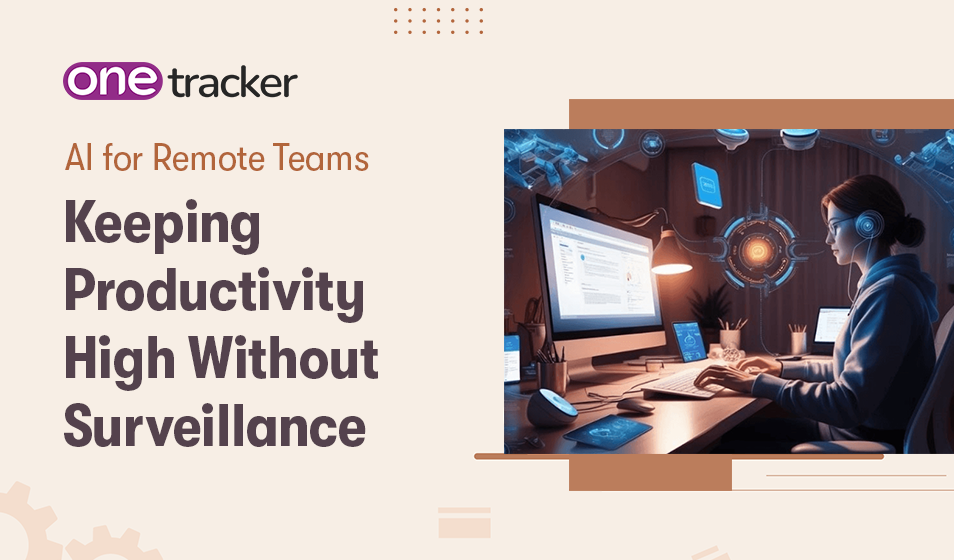
Remote work has changed from being a temporary option to becoming an essential business practice for organizations around the world. The system provides many benefits to employees, but poses one main obstacle. Requiring organizations to find methods to keep their workers productive without permanent monitoring.
Many organizations fall into the trap of intrusive surveillance, such as tracking keystrokes, taking random screenshots, or constantly monitoring activity. While these methods provide immediate insight, they often result in significant trust and morale problems, ultimately negatively impacting long-term results. The smarter alternative lies in shifting away from invasive remote employee monitoring software and instead using AI to empower teams, not control them. This blog demonstrates how modern AI technology enables remote teams to maintain high productivity while keeping their privacy and trust relationships intact.
The Problem with Surveillance-Based Productivity
Surveillance-driven tools exist to monitor user activities without assessing their actual results. The system believes that increased screen time will lead to higher user output which does not occur in most cases. Workers who receive nonstop oversight from their employers experience increased tension because they feel their work is excessively controlled yet remains unrecognized. The method establishes a workplace culture where employees follow rules instead of taking responsibility for their tasks.
Team members will spend their time on nonessential activities instead of doing their most valuable work. The process will lead to decreased creative output and innovative development. Resulting in lower employee satisfaction throughout their work life. The process requires organizations to change their approach from monitoring employee activities to supporting remote teams through performance-based research.

→ Contact us
How AI Changes the Game
AI-powered tools provide an entirely different method of operation. The system evaluates employee work patterns to detect operational problems, which it solves by delivering practical solutions that enhance team performance.
AI systems achieve productivity assessment without requiring continuous monitoring of user interactions. Rather than utilizing traditional remote employee monitoring software, the system uses pattern analysis. Including project schedule patterns, task achievement statistics, and team interaction patterns. To pinpoint areas of improvement. It establishes a fair measurement system, evaluating user performance based on their actual results instead of their daily work activities.
Smarter Task Management and Prioritization
The primary difficulty that remote teams face involves establishing their work priorities. Employees face difficulties because they lack assistance to determine which tasks need their urgent focus. AI creates a solution which automatically arranges tasks by their urgent need and necessary connections. The system provides next tasks for users while identifying possible project delays and redistributing tasks among team members who have excessive work. The system enables all employees to remain focused on organizational objectives because it eliminates the need for ongoing management.
Enhancing Collaboration Without Micromanagement
The communication between remote workers gets disrupted because they work from different locations. Teams experience difficulties maintaining their operational rhythm because important updates get lost in messages. AI uses conversational summaries to extract essential action points. While preventing any important information from being missed. The system recommends optimal times for teamwork by analyzing both team availability and their work habits. The AI system delivers a real-time overview of progress. Helping managers track updates while making teamwork more efficient.
Real-Time Insights, Not Real-Time Monitoring
The primary distinction between AI-based productivity systems and surveillance systems lies in their respective purposes. The surveillance tools track the activities of people while the AI works to enhance operational processes. AI dashboards show project status information, team performance data and identify operational challenges. The AI system detects project delays at specific points and provides recommendations for process enhancement. The insights enable leaders to make improved decisions without needing to observe their employees.
Building a Culture of Trust and Accountability
The foundation of successful remote teams relies on trust between their members. Employees show higher work dedication when their employers demonstrate trust in their abilities. AI supports this by creating transparency around goals, expectations, and outcomes.
Unlike a traditional employee productivity tracker that might focus on activity metrics, this AI-driven approach provides clear information about required tasks and methods of measuring work progress. The system transforms work evaluation from "Are you working?" to "Are we achieving our goals?" which results in a more productive and healthier work environment.
Reducing Burnout and Improving Work-Life Balance
The use of surveillance tools creates a situation which results in employees working excessively. Employees who realize their activities are being watched will continue to work longer than necessary because they feel watched. AI helps prevent this by identifying signs of burnout. Including people who work extended hours without taking breaks. And people who have imbalanced work schedules.
The system recommends break periods while it distributes work among team members. And it alters project timelines to help teams maintain their efficiency. A team that has received sufficient rest will experience both increased happiness and enhanced performance capabilities.
Why Businesses Should Rethink Productivity Tools
The future of work requires companies to establish control over their employees because they need to protect their organization from surveillance-based practices that drive top employees away. The organizations that use advanced monitoring technology will lose their best employees. But those which build smart systems will create better and more durable teams.
AI enables companies to increase work output while maintaining positive work conditions for their staff. The system creates space for individuals to concentrate on important tasks and work together efficiently. While achieving consistent outcomes. Remote team organizations now face the challenge of using artificial intelligence because they must determine responsible implementation methods.
The Conclusion
AI provides organizations with a strong capability to transform their productivity methods through its application in remote work settings. Businesses can develop a trust-based work environment by using their resources to measure operational outcomes instead of relying on a traditional employee productivity tracker. The most successful teams are not the most monitored; they are the most empowered. The implementation of suitable AI solutions enables organizations to maintain operations at their desired performance level beyond the initial achievement of their objectives.
Ready to empower your remote team without compromising trust? Contact our team at OneTracker to discover how AI-driven insights can transform your productivity strategy.
About the Author